
-
About
- Facilities
-
Programs
Pre-K (0-5 yrs)Youth (6-17 yrs)Adult (18+ yrs)
-
Parks/Beaches
ParksOutdoor Activities
- Events








The golfing landscape has witnessed a remarkable resurgence over the past three years, transcending the conventional boundaries that once defined the sport. National Golf Foundation data revealed a staggering 106 million people engaged in golf in 2021. We’ve seen the interest in golf grow exponentially at the Park District at the Highland Park Golf Learning Center and at our beautiful Sunset Valley Golf Club. “It is especially exciting to see so many kids enjoying the game and coming to us wanting to play golf for the first time,” said Ryan Ochs, Superintendent of Golf Operations at Sunset Valley, “and once they gain some basic skills, they’re hooked on this game that they can play for the rest of their lives.”
To meet the demand for golf in Highland Park, the Park District is now partnering with The Golf Practice to bring the community a wide range of golf summer camps and group lessons with PGA-certified coaches. We’re excited about this and think you will be, too.
We asked Alex Prior, Co-owner/Director of Operations at The Golf Practice, to tell us what to expect. “This summer, we’re happy to team up with Park District to deliver the most comprehensive approach to golf training on the North Shore. Through our multi-level camps and programs, junior golfers have a complete path from beginner to high school varsity golfer and beyond.”
The Golf Practice uses a holistic approach to golf training, focusing on the whole student and not just swing mechanics. Golfers will build their overall athleticism and coordination, develop their mind and body, and learn important social skills—including course etiquette—that will elevate them on and off the golf course. The golf curriculum at The Golf Practice is based on developing curiosity about the game. Being curious will help a student learn throughout their life,” said Prior, “We think curiosity is one of the most important life skills we can impart in our training.”
Golf summer camps designed by The Golf Practice coaches include fast-paced stations, colorful aesthetics, and an energetic staff that creates an engaging environment of learning and fun. “Once students become interested in the game and develop their skills, they graduate to the Travel League and High School Prep Summer Camps where they can hone their game, learn to compete, and develop confidence on the golf course.”
As with each of our sports programs at the Park District, golf camp participants learn the fundamentals, are encouraged to set and achieve goals, make new friends, and become caring, confident, successful young adults. It’s what we’re all about.
In Highland Park, hundreds of kids (and adults) are discovering the game of golf for the first time every season. The challenge in retaining these newcomers is why we’re developing exciting and innovative programs that include instruction, on-course play, and socialization. When you ask Ryan Ochs why he thinks it will continue to grow, he shares an interesting perspective: “For some golfers, technological advances have made the game more fun and accessible – things like GPS on the golf carts. For many golfers, the flexibility to work remotely at their 9 to 5 job has opened up more free time for leisure activities—one of the genuine benefits of the pandemic. Parents are bringing in their kids, and kids are seeing golf for the first time on social media—including influencers on TikTok.” Years ago, it was all about following Tiger Woods. “Now, young golfers are more interested in the whole game than in any one player on the tour,” and that means they keep playing through high school and college.”
“To ensure everyone has access to golf, the Michael Goldman Memorial Golf Scholarship is available to Highland Park and Highwood middle and high school students facing economic, social, or emotional challenges,” said Ochs. Last year, 12 applications were received. “That’s double the number from past years.” The annual scholarship is made possible through our Parks Foundation by a generous donation from the family of longtime Highland Park resident Michael Goldman as a means for young people to overcome obstacles and foster physical and emotional well-being through golf. Rob Saunders, the Park District’s resident PGA Pro, interviews and selects applicants. The scholarship provides one-on-one golf instruction and the use of a set of clubs. You can read more about this unique scholarship on the Park Foundation website.
We know that the golfing resurgence is not just a temporary phenomenon; it’s shaping the future of the sport. For young golfers, it’s about the whole package: a healthy three-season outdoor activity (that happily continues indoors during the winter), making friends, and learning life skills that they carry over into school, family, and the community.
Check out the new golf programs on your Park District’s website. The Highland Park Golf Learning Center is where you’ll find an impressive Driving Range, with 40 hitting stations–grass tees and mats–a short game practice area, a putting green, and a bunker practice area. During winter, you can enjoy the indoor hitting range at the Highland Park Fieldhouse. It’s open Monday–Friday from 9:00 a.m. to 3:00 p.m. Summer Camp registration is going on now, and with the increased interest in golf, you’ll want to sign up early! In the meantime, you can practice yelling Fore!*
See you on the course!
*There are some interesting theories on why golfers yell Fore! after they’ve hit the ball. You can read more about that here.
Some paths take unexpected turns in life, leading us to extraordinary places. Belle Kolman’s journey at the Park District of Highland Park is a testament to this. Over three decades, she has witnessed and actively contributed to the evolution of her role and the organization. In this article, we explore Belle’s remarkable career, the experiences that have shaped her, and the enduring impact of her work with the Park District of Highland Park.
Belle’s journey with the Park District began when she and her family moved to Highland Park, seeking to supplement their income. Flexibility was crucial, as she had children to take care of. The opportunity came through a recommendation from the lady who sold them their house – a program at the Karger Center that allowed parents to drop in with their kids. Belle saw this as a perfect match for her needs, as she could bring her daughter along. Belle’s aspiration to become a child psychologist made this job even more appealing. She started at an hourly rate of $9, setting the stage for an incredible career ahead.
Belle’s first day at the Park District is etched in her memory due to a heartwarming encounter. She met a little girl who happened to be friends with her daughter. When the girl’s mother arrived to pick her up, she was visibly upset, facing a family emergency that prevented her from visiting her family because she had her daughter with her. Belle’s kindness shone through as she took the child home with her. In a twist of fate, Belle discovered that the child’s father was a Big Brother to her sister at the University of Illinois. This unexpected connection deepened the bonds of friendship.
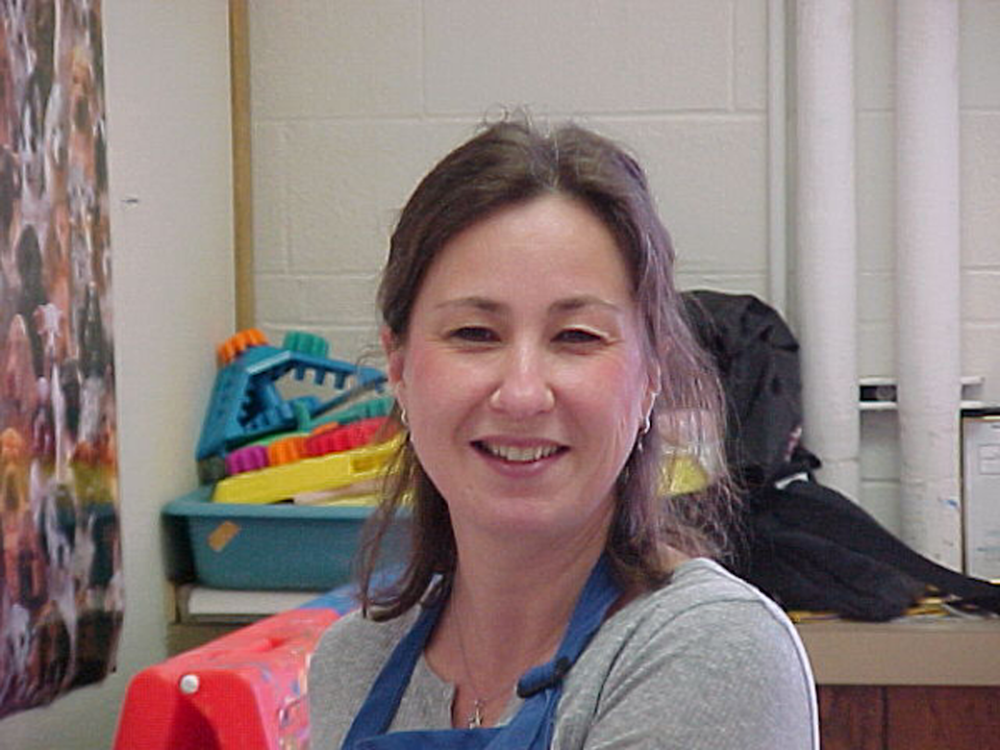
Remarkable achievements have marked Belle’s journey at the Park District, one of the most significant being her role in starting programs from scratch. She was instrumental in creating programs like “Moms Morning Away,” “Terrific Times,” and a “Moms and Tots” program at the Recreation Center of Highland Park when it first opened, alongside “Camp Tot Stop.” These programs were built from the ground up, with Belle overseeing everything from curriculum development to securing necessary supplies.
One of the most cherished aspects of Belle’s work at the Park District is playing with the children. She often finds herself on the floor, giving the kids hugs and engaging in conversations. These interactions, spanning many years, have profoundly impacted Belle. The bonds formed and the joy she derives from these moments are unparalleled.
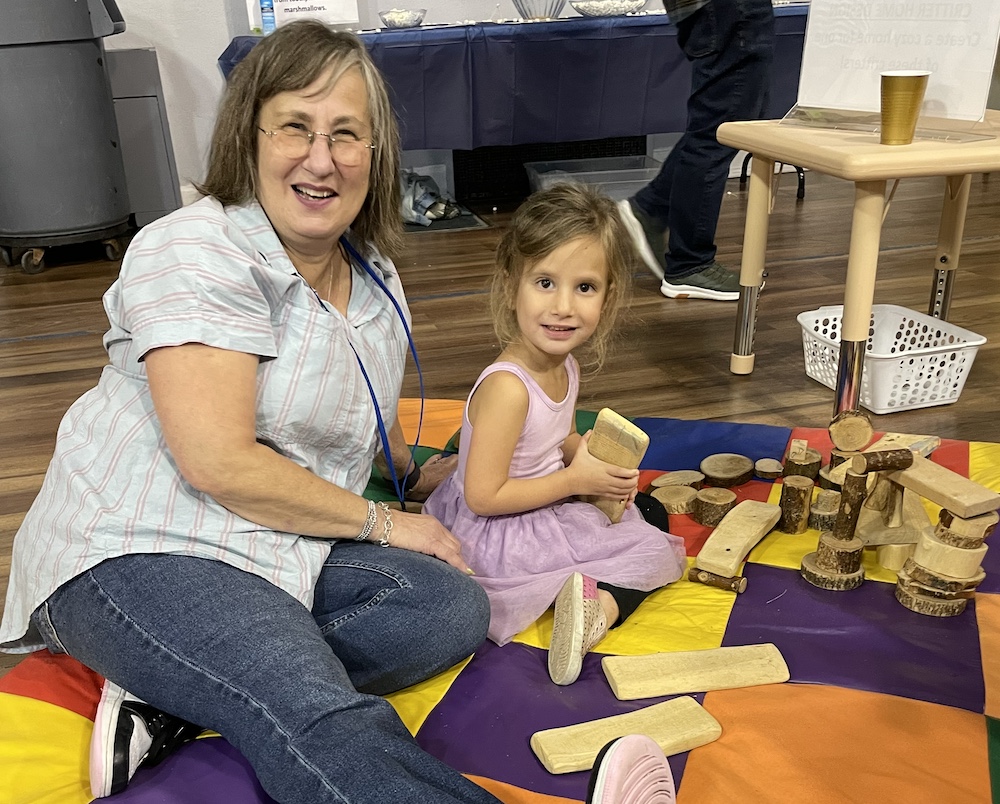
Over the past 30 years, Belle has witnessed significant changes in childcare. With increasingly stringent regulations and administrative requirements, the job has evolved substantially. The focus now lies on what’s considered more appropriate and mainstream, with parents becoming more vigilant and watchful. The world has transformed, and so has the work.
Belle has collected a trove of cherished memories throughout her journey with the Park District. She recalls being part of the “Touch a Truck” event and her playful role as Mrs. Potato Head for Halloween. The reunions with former students, including camp counselors, are moments of pride and nostalgia. Belle’s bonds with her colleagues and personal connections have been a source of immense happiness.
Belle’s incredible journey at the Park District is a testament to the passion, dedication, and love she brings to her work. Her remarkable career, marked by adaptability and unwavering commitment, is an inspiring example of the impact one person can make in the lives of children and families. As Belle continues to play an integral role at the Park District, her legacy is a testament to the organization’s enduring commitment to the community it serves.
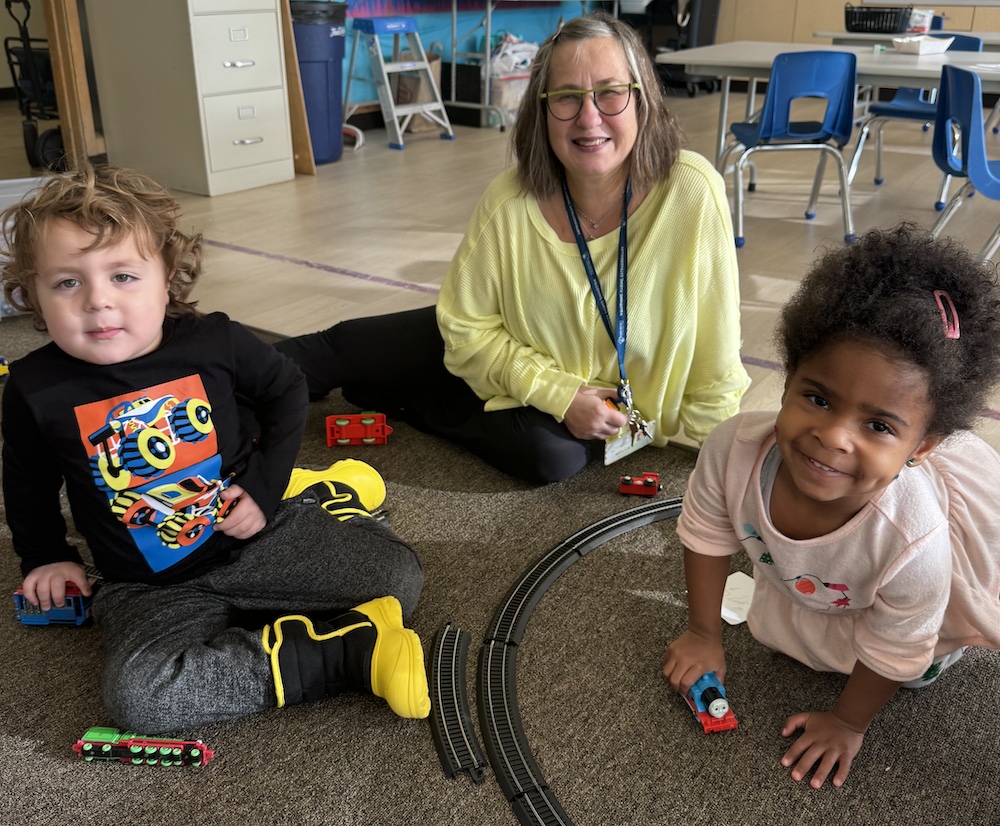
Are you or your child/ren an alum of ParkSchool or one of Belle Kolman’s programs? Submit a memory or note to Belle here to celebrate her 30 years with the Park District of Highland Park!
The Park District of Highland Park is a member of the Highland Park Character Counts Steering Committee in collaboration with the City of Highland Park, North Shore School District 112, and the Highland Park High School, which honors nominees whose beliefs, attitudes, and actions consistently exemplify the six pillars of character: trustworthiness, respect, responsibility, fairness, caring and citizenship.
Nominations are now being accepted for the 2024 Character Counts Pillar Award, and we hope you will consider nominating worthy candidates from the Park District of Highland Park. This year’s deadline is December 31, 2023.
The Six Pillars of Character is an integral part of the Highland Park community philosophy. To become more productive citizens of the future, children need to develop a set of core values that they can build on and call on throughout their lives to guide their behavior and attitudes. They also need adults serving as role models of good character. Six building blocks of character – trustworthiness, respect, responsibility, fairness, caring and citizenship – form the foundation of character education. These building blocks are inseparable parts of a complete attitude that will help children reduce risk behaviors, improve achievement and develop personal integrity, and for adults to live together in a civil manner.
These goals cannot be accomplished through the efforts of any one teacher, parent or institution. The responsibility for developing a nation of morally conscious students must be shared by all. Only through shared commitment can we hope to raise the level of character consciousness.
On this edition of Wild Insights, Mark takes us along to answer the question, “Where do the Heller bees go in the winter?”
By Liz Vogel
Of all the disciplines and practices that I like to claim—artist, designer, gardener—I think most of all I am an observer within the small parcels that I tend. On a late fall day, when the temps have settled in the lower portion of the thermometer and mornings bring a stunning display of frost lined leaves and stems, I think about all of the usual garden suspects and wonder where they are now. Gone are some birds, butterflies, and dragonflies who follow the Lake Michigan flight path south and mingle over-head come late fall. Those still in the garden though, in some form or stage, are the caterpillars of the endangered pearl crescent butterfly who overwinter under the basal leaves of some asters such as the big-leaved and sky-blue.
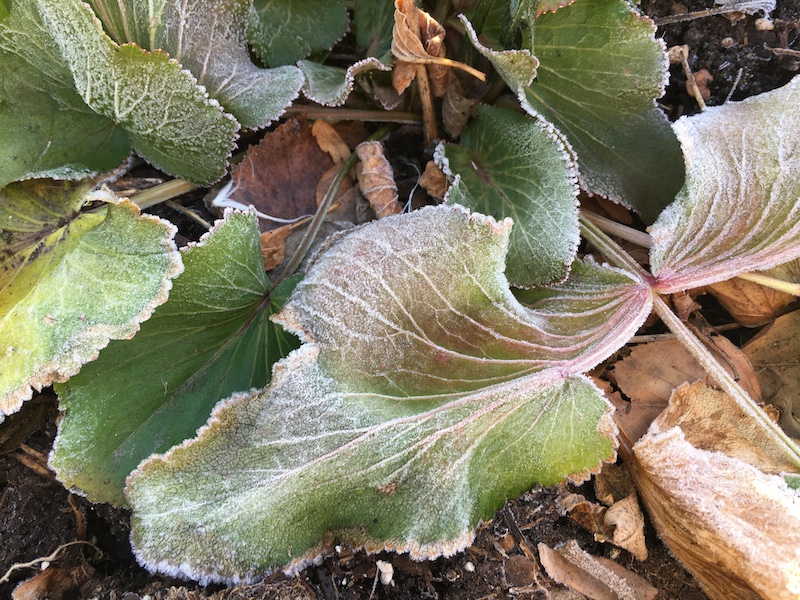
The black swallowtail butterfly overwinters as a chrysalis, delicately tethered to the side of a dried branch or stem. The Queen bumblebee is tucked away in the soil or under dried leaves, having produced an anti-freeze-like substance to withstand the coming cold. She will emerge early in spring to search for a new nesting location. Who else is still in the garden? The Carolina mantis, in its smallest form wrapped up in a flat sandy brown case among hundreds of other fertilized eggs. You may see these structures in the garden, attached to a vertical surface, and witness as the nymphs hatch mid-spring. They look like a band of tiny aliens patrolling the area.
Among those that find shelter within craggy bark or small holes in a tree? The mourning cloak and comma butterflies, along with a variety of beetles and small native bees.
My point in all of this is: though it is cold and quiet, and possibly covered in snow, many of our summer favorites are still in the garden—as egg, caterpillar, chrysalis or adult—waiting for warmer temperatures to return before they once again buzz and weave among our flowers. We can all help them out by being a bit less tidy and allowing fallen branches, dried leaves and old plant stems to remain. If cutting back (no matter what time of year) clip dried stems into smaller pieces and tuck them between upright branches to help hold them during windy days.
A more vibrant garden (if we begin to better understand it) can not only come from the brightly colored flowers that we adore, but from the complexity that grows with each new season—if we evolve the way we garden to allow for the queen bumblebee, swallowtail, mantis and more.
Liz is a professional horticulturist, observer, artist and writer, and co-owner of North Branch Natives, an education-focused native plant nursery.
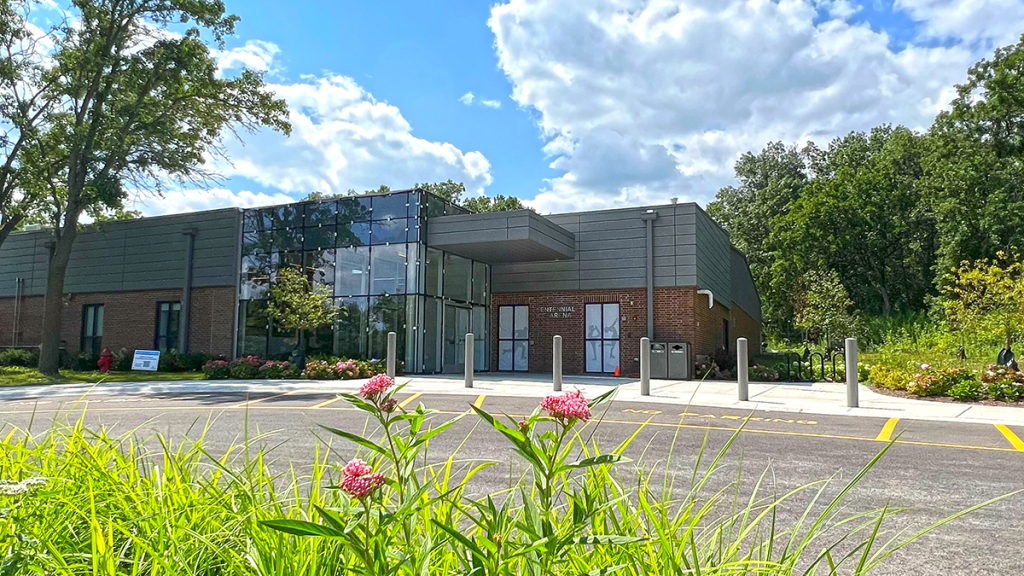
Childhood is a time of growth, exploration, and developing various skills. Engaging in physical activities from a young age can profoundly impact a child’s overall well-being. Ice skating and gymnastics offer many physical, mental, and social benefits. Your child can experience the joy and benefits of both activities at the newly renovated Centennial Ice Arena! Our highly qualified staff ensure your kiddos evolve through our progressive programming.
Centennial Ice Arena can help your young skater or tumbling star build strength and flexibility and nurture a sense of self-discipline and self-confidence. Here are some of the wonderful benefits of ice skating and gymnastics.
The Benefits of Ice Skating
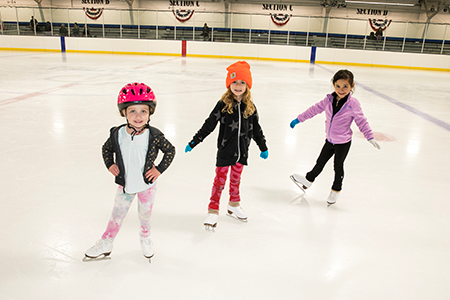
1. Physical Fitness: Ice skating is an excellent way to get kids moving and stay physically active. It engages multiple muscle groups, especially in the legs and core, improving balance and coordination.
2. Cardiovascular Health: Skating promotes a healthy heart by boosting cardiovascular endurance. The aerobic aspect of ice skating helps improve lung capacity and overall fitness.
3. Balance and Coordination: Ice skating requires children to develop a strong sense of balance and coordination, which can transfer to improved agility in other sports and daily activities.
4. Mental Focus: Skaters must concentrate and focus to glide gracefully on ice. This cultivates mental discipline and sharpens their ability to pay attention to detail.
5. Social Interaction: Ice skating often takes place in group settings, providing kids with an opportunity to make friends, learn teamwork, and enhance their social skills.
6. Confidence Building: As children learn to skate, they build self-confidence, setting and achieving small goals, and overcoming challenges, all of which contribute to a positive self-image.
7. Stress Relief: Like all physical activities, ice skating is an excellent way for children to blow off steam, reduce stress, and relax.
The Benefits of Gymnastics
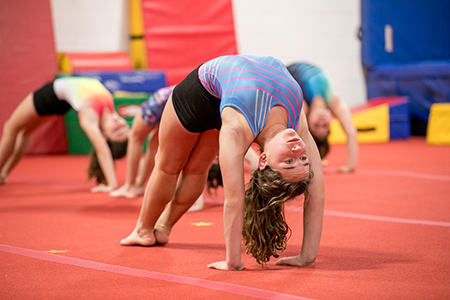
1. Strength and Flexibility: Gymnastics builds strong muscles and promotes flexibility. Children develop power and endurance through routines and exercises.
2. Body Awareness: Gymnasts learn to understand their bodies better, which can help reduce the risk of injury and improve posture and body mechanics.
3. Discipline and Focus: The structured nature of gymnastics teaches children discipline and focus as they work diligently to master new skills and routines.
4. Balance and Coordination: Similar to ice skating, gymnastics hones balance and coordination, improving a child’s overall athleticism.
5. Goal Setting: Gymnastics is goal oriented. Children set goals for themselves, learning the value of hard work and perseverance.
6. Creativity and Expression: In artistic gymnastics, children can express themselves creatively through their routines, fostering artistic and imaginative abilities.
7. Self-Confidence: As children gain competence and master challenging moves, their self-confidence soars, and they learn to trust in their abilities.
So, what are you waiting for? Develop your young one’s physical fitness, mental acuity, discipline, and social skills. Whether your child is eager to learn a new skill and have fun or progress to be a true competitor, Centennial Ice Arena provides it all.
With the cold weather comes snow and winter fun! Take a look at everything you need to know about our outdoor winter activities.
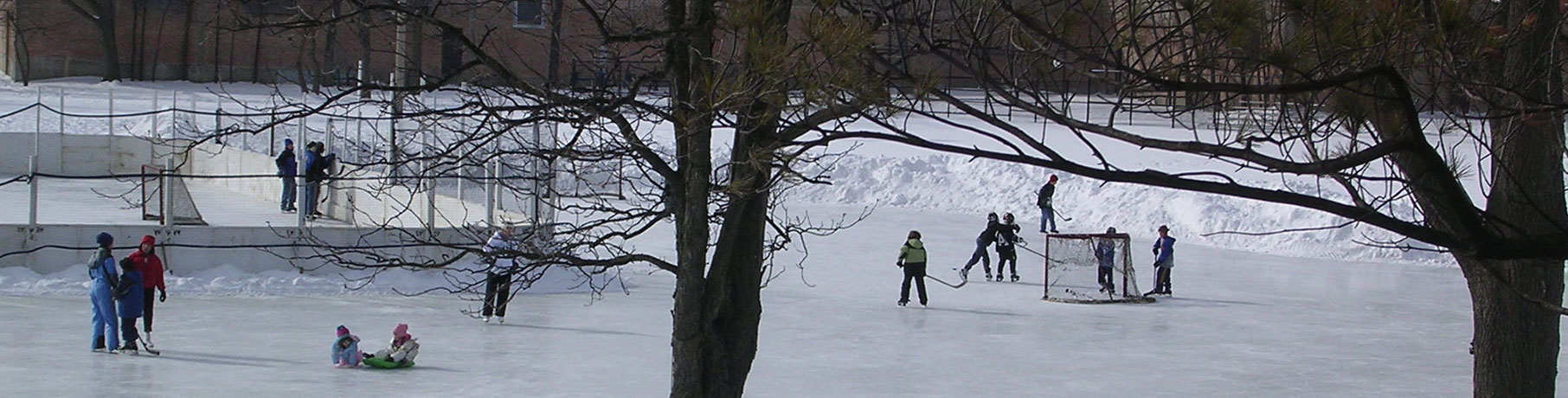
Sunset Woods Park: 1801 Sunset Road
Hours: 9am-9pm daily (rink is lit by existing park lights)
When weather conditions allow (an average temperature of 20 degrees Fahrenheit or colder for 5 consecutive days, 5-6 inches of ground frost), Park District staff will begin flooding the ice rink at Sunset Woods Park. It takes four 24-hour days to spray and freeze the water to create a base and finish ice.
Throughout the season, the rink may be closed for snow removal or unsafe ice conditions.
Skating is free and the rink is sectioned off to allow for separate hockey and recreational skating. Groups should be considerate of one another. For the safety of our patrons, helmets are required in the hockey rink.
There is no supervision or skate rental at the outdoor rink. Anyone using the ice rink should be aware that the risk of injury is present. The Park District encourages everyone to participate in this activity in a safe manner and suggests that children be supervised by a responsible adult.
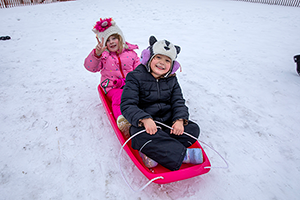
Danny Cunniff Park: 2700 Trail Way Street (located toward the back of the park, just south of Centennial Ice Arena)
Hours: No set hours
The sled hill is free and open to the public. Please be aware that there is no supervision or warming facility at the sled hill. The Park District of Highland Park encourages everyone to participate in this activity in a safe manner and to follow these safety guidelines:
Throughout the season, the sled hill may be closed from time to time.

Heller Nature Center: 2821 Ridge Road
Hours : 7:30am – Dusk
Hit the snow on three miles of ungroomed trails at Heller Nature Center. Skiing with Skis is available whenever snow conditions permit (4″ base or greater). Call 847.433.6901 to check snow conditions.
$13/person: Reservations must be made online, no walk-ins.
If you have your own skis, please feel free to use our trails at your leisure from 7:30am to dusk.
Monday-Sunday: 9-10am, 10:10-11:10am, 11:20am-12:20pm, 1-2pm, 2:10-3:10pm, 3:20-4:20pm

Highland Park Golf Learning Center: 2205 Skokie Valley Highway
Hours : Dawn – Dusk
Open mid-December through mid-March (dates are weather dependent). A large outdoor venue for your dog to run off some of that cabin fever energy. There are two off-leash exercise areas available, depending on the size of your dog.
For more information on our dog parks and to apply for a dog park membership, click the button below.
On Wednesday, November 1, the Park District of Highland Park, in conjunction with the Parks Foundation of Highland Park, celebrated the renaming of Cloverdale Park to Fontana-Pasquesi Park in honor of the Italian immigrant families from the Modena Province in the Emilia Romagna Region who settled in this area beginning in the early 1900s. The Fontana-Pasquesi family gave a generous donation to the Parks Foundation that will be used to maintain and improve the park for the neighborhood and the entire Highland Park community for many years to come.
The Park District Board of Commissioners approved the renaming of the park at the October 25, 2023 Regular Board Meeting. The naming rights agreement was presented and approved by the Park Board of Commissioners at the August 23, 2023, Regular Board Meeting. The name sat for a period of 60 days for public review before final approval by the Park Board.
A dedication plaque will be posted at the park giving the history of the Italian-American families who settled in the Highland Park/Highwood area.
This park is dedicated to the Italian immigrants from the Modena Province in the Emilia Romagna Region. The capital of Modena is the city of Modena, which is one of the Sister Cities of Highland Park.
These immigrants settled in Southeast Lake County beginning in the early 1900s. They strongly supported their adopted homeland and were proud to become U.S. citizens with many serving in the U.S. Armed Forces.
It was their sacrifice, spirit, and work ethic that contributed to Highland Park History.
Laurence Pasquesi
Maria Fontana Pasquesi
We can put you where you’ve always wanted to be. In the spotlight. In the action. Onstage!
Your Park District is creating a theatre program where all are welcome, and all can shine. Acting? Yes. Singing? Yesssss! Designing and building props? We have all the tools.
Do you love to perform? Well, we spent the last year thinking about you. We used our time creating a new Theatre program where you can use your talents, learn, grow, and show your friends and family that you’ve got what it takes! Sound like fun? It is!
This fall, you have the opportunity to sign up for any of the 8 new classes we’ve created that can start you on the road to stage (or screen) greatness. Take a look:
Introduction to Theatre. This class is all about learning stage directions. Those are all critical for any young performer, and you’ll concentrate on the basics, and the correct terminology, so you’re ready for whatever comes your way. Things like:
Broadway Here I Come. Acting, of course. But also music and dance. If musical theater is your thing, then this is your class. You’ll be swell. You’ll be great. You know the rest.
Teen Improv. This is a brand new class. It’s specialized, but maybe you are, too. Check it out!
Take the Stage. Our 2023 summer camp was a great big hit! Look for details next spring.
In our art classes at the Park District, we’ll teach you what to look at, how to look at it, and how to draw it!
Most people who really would love to draw and paint have never taken a class because they just don’t think they have any talent. Well, drawing is a skill. It can be taught. We can teach you to draw, and you’ll have a great time doing it.
How do we know? We do it every day, for artists of all ages at all levels. Can you see shapes? Great! That’s where all art begins. Circles, squares, triangles, ellipses. On one level it’s quite simple, and when you learn to see, and learn to make the shapes you’re seeing, your confidence grows exponentially. Join one of our classes and beyond the joy of creating you’ll also get some extra benefits.
More hand-eye-brain coordination. That’s important at every age, along with developing and maintaining fine motor skills, but seniors may find it especially important to keep their hands, eyes, and brain working together in harmony.
Actual benefits to your brain. While you draw, your brain builds new connections and pathways. The left side is responsible for logical thinking and the right side is where your creativity comes from. Since both sides are active, the brain grows. Query: If you draw the brain does your brain grow even more?
Concentration. Drawing requires that you focus on the subject and concentrate on the marks you’re making. You must be present. In the moment. Doing that for an extended period of time, like a class, can train your brain to do that at other, perhaps more important times. It’s so much better for you than scrolling endlessly, and when you’re done concentrating on your drawing you just might have a beautiful piece of art that you can be proud of for years to come. Wouldn’t that be lovely!
A better mental attitude. Many people feel more at ease while they are drawing. Certainly, Vincent did. Drawing is a well-known therapy tool for stress relief. It can feel like meditation. When you feel productive, you more often just feel good about yourself. We know we do.
You might just develop an artist’s “eye.” Drawing can help you see proportions and the relationships between objects. It can help you be a better judge of measurements and distances. Things you can apply to other areas of your life. Drawing can be so much more than marks on paper, once you learn to see.
Did we mention how much fun it is? If nothing else we’ve said has moved you (or made your brain light up), think about taking an art class with a friend. Sharing your new skills and enjoying each other’s sketches is one of the great joys you’ll experience. We guarantee it!